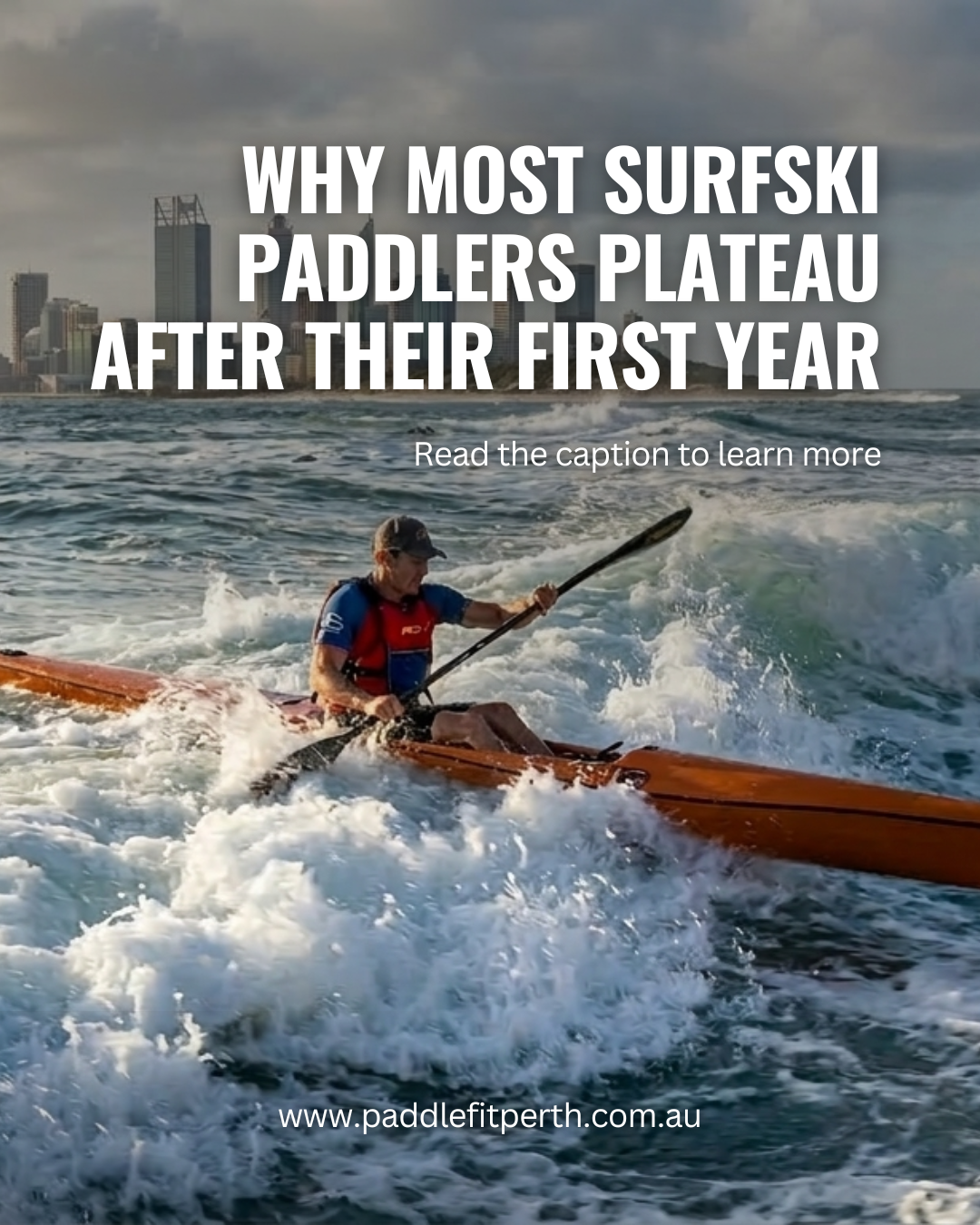
Why Most Surfski Paddlers Plateau After Their First Year
The first year of surfski paddling is exciting.
Everything feels new. Every session brings improvement. Balance gets better. Speed increases. Downwind runs begin to make sense.
Many paddlers experience rapid progress during this early phase.
But then something interesting happens.
After about a year, improvement often slows down.
Speed stops increasing. Technique feels stuck. Sessions feel similar to ones from months ago.
This stage has a name in sports performance.
It is called a plateau.
And it happens to almost everyone.
Let us explore what it really means and why it occurs.
What Does Plateau Mean in Paddling?
A plateau is a period where improvement slows or stops even though you continue training.
You are still paddling regularly. You are still putting in the effort. But your performance does not noticeably improve.
Your speed may stay the same. Your endurance may feel similar. Even your technique might feel unchanged.
It can be frustrating.
Many paddlers begin to wonder if they have reached their natural limit.
But in most cases, that is not the problem.
Plateaus are usually a sign that the body has adapted to the training it has been given.
And adaptation means it is time for something different.
The First Year Advantage
During the first year of surfski paddling, improvement happens quickly because everything is new.
Your body learns to:
- Balance on a narrow hull
- Rotate through the torso
- Coordinate leg drive with the stroke
- Read small bumps and boat wakes
Even basic time on the water develops these skills.
In this phase, almost any paddling improves performance.
Simply spending more hours in the ski builds familiarity and confidence.
But once these basic skills are established, progress becomes more complex.
The Comfort Zone Problem
One of the biggest reasons paddlers plateau is training that becomes too comfortable.
Many paddlers settle into the same type of session:
A steady paddle at moderate effort on familiar water.
It feels productively. Distance accumulates. Fitness stays stable.
But the body quickly adapts to repeated effort levels.
Without variation or challenge, improvement slows.
Progress requires new stimulus.
That might mean:
- Increasing intensity
- Practicing technique deliberately
- Paddling in different conditions
- Adding interval training
Without these changes, training becomes maintenance rather than development.
Technique Becomes the Limiting Factor
Another reason improvement slows is that technique begins to matter more.
Early gains often come from general coordination and balance.
Later gains require refinement.
Small details start to matter:
- The angle of the paddle catch
- The timing of leg drive
- Posture and rotation
- Relaxation during the recovery phase
These changes are subtle. They require awareness and often external feedback.
Many paddlers continue repeating the same stroke pattern without realizing small inefficiencies are limiting speed.
This is where coaching, video feedback, or focused drills can make a big difference.
Conditions Matter More Than You Think
Flat water paddling builds fitness, but ocean paddling requires adaptability.
After the first year, paddlers who train only in calm conditions sometimes struggle when the water becomes unpredictable.
Wind chop, boat wake, and cross swell demand balance and fast reactions.
Those who regularly paddle in varied conditions often continue improving longer because their skill set keeps expanding.
The ocean is a dynamic classroom.
The Mental Side of Progress
Plateaus are not just physical.
They are also mental.
When improvement slows, motivation can drop. Sessions may start to feel repetitive.
Some paddlers respond by pushing harder every time they paddle.
Others lose focus on technique and simply go through the motions.
Neither approach usually solves the problem.
Instead, progression often returns when paddlers become curious again.
Trying new sessions. Learning new skills. Paddling different routes. Exploring downwind conditions.
Renewed engagement can restart the improvement cycle.
Breaking Through the Plateau
If you feel like your paddling has stalled, consider introducing small changes.
You might try:
- Short interval sessions to build power
- Technique focused paddles
- Practicing accelerations to catch runs
- Training in slightly more challenging conditions
- Getting feedback from a coach or experienced paddler
Progress rarely returns through more of the same training.
It usually comes from training differently.
The Good News About Plateaus
Experiencing a plateau does not mean you have stopped improving forever.
In fact, it often means you have reached the next stage of development.
The early gains of balance and basic coordination are behind you.
Now the real craft of surfski paddling begins.
Refining technique. Learning to read water. Applying power efficiently.
These skills take longer to develop, but they also unlock the biggest long term gains.
A Question Worth Asking
If your paddling feels stuck, ask yourself this:
Are you simply repeating sessions
Or are you deliberately improving your skills?
Surfski rewards those who stay curious about their technique, their training, and the ocean itself.
Plateaus are not the end of progress.
They are simply the moment where progress asks you to evolve.
Want to break through your paddling plateau?
Join us at Paddle Fit Perth for a session where we focus on technique, efficiency, and real ocean skills so you can keep improving long after your first year on the water.
Train smarter. Paddle stronger.