The Art of Balancing Speed and Endurance in Long-Distance Surf Ski Paddling

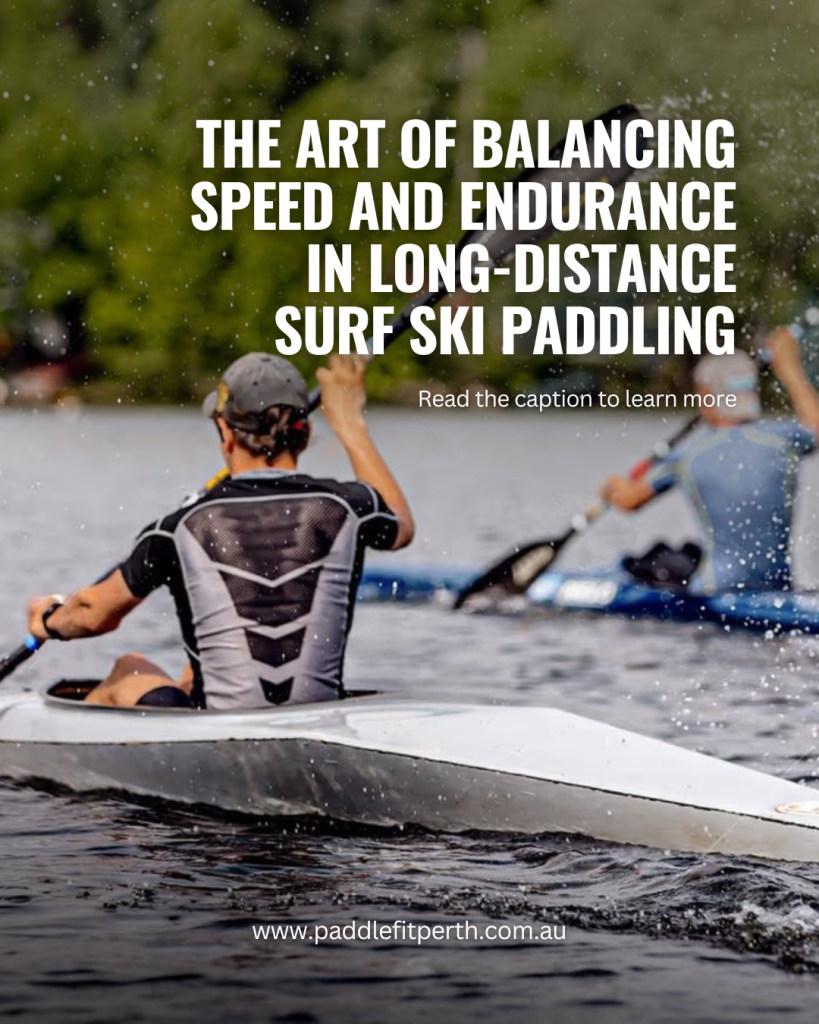
The Art of Balancing Speed and Endurance in Long-Distance Surf Ski Paddling

Long-distance surf ski paddling is one of the most exhilarating and physically demanding paddle sports. It combines speed, endurance, technique, and ocean awareness into a single, dynamic experience. Whether you are new to surf ski paddling or looking to improve performance, mastering the balance between speed and endurance is key to paddling efficiently, safely, and with less fatigue.

At Paddle Fit Perth, we help paddlers of all levels refine their skills to paddle stronger and smarter in open water. This guide breaks down the essential principles for balancing speed and endurance in long-distance surf ski paddling.

What Is Long-Distance Surf Ski Paddling

Long-distance surf ski paddling involves covering extended distances in a surf ski, a long and narrow craft designed for speed and stability in ocean conditions. Unlike flatwater kayaking, surf skis are built to handle wind, swell, and chop, making them ideal for downwind paddling, ocean racing, and long training sessions.

Success in surf ski paddling relies on more than just fitness. Technique, pacing strategy, and ocean awareness are critical for maintaining consistent speed and endurance over long distances.

Why Balancing Speed and Endurance Matters

Many paddlers focus too much on speed, which can lead to early fatigue and compromised technique. Others may paddle too conservatively, slowing progress and limiting performance gains.

Finding the right balance between speed and endurance allows surf ski paddlers to:

  • Sustain energy efficiently over long distances

  • Maintain proper stroke technique throughout the paddle

  • Reduce fatigue and prevent injury

  • Maximise performance during long training sessions or races

The key is learning to push your limits without burning out too quickly.

Key Techniques for Efficient Surf Ski Paddling

Proper technique is essential for energy efficiency, speed, and injury prevention. Small adjustments in your stroke and body mechanics can have a huge impact on long-distance performance.

Paddle Stroke Efficiency

A smooth, controlled stroke reduces wasted energy and helps maintain speed over time. Focus on:

  • Clean Paddle Catch: Enter the water fully and engage your core muscles to transfer power efficiently

  • Torso Rotation: Rotate from your torso rather than your arms to maximise power and reduce shoulder fatigue

  • Controlled Exit: Finish each stroke smoothly to maintain rhythm and flow

Pacing and Energy Management

Sustainable pacing is vital for long-distance surf ski paddling.

  • Start conservatively to preserve energy for the latter stages of your paddle

  • Monitor stroke rate and heart rate to stay in your optimal endurance zone

  • Adjust effort based on ocean conditions, wind, and swell

Ocean Awareness and Timing

In surf ski paddling, timing is just as important as power. Reading swell, waves, and currents allows you to:

  • Link runs during downwind paddling for faster and more efficient speed

  • Conserve energy by paddling with the water instead of against it

  • Maintain balance and control in unpredictable conditions

Hydration and Nutrition

Endurance depends on proper fuel. For long surf ski paddles:

  • Drink water regularly to avoid dehydration

  • Snack on light, energy-dense foods to maintain stamina

  • Replace electrolytes for longer sessions

Safety Considerations for Open Water Surf Ski Paddling

Safety is a critical part of long-distance surf ski paddling. Understanding your environment allows you to paddle confidently while reducing risk.

  • Always check weather and water conditions before heading out

  • Carry essential safety gear, including a whistle, PFD, and paddle leash

  • Know your limits and recognise early signs of fatigue

Improving Your Surf Ski Paddling Performance

Improvement comes from consistent practice, technique refinement, and strategic pacing. Combining proper stroke mechanics with ocean awareness and endurance training leads to:

  • Increased speed without sacrificing stamina

  • Reduced fatigue and improved recovery

  • Greater confidence in all ocean conditions

At Paddle Fit Perth, we help paddlers develop these skills through structured coaching, ensuring every session builds strength, speed, and efficiency.

Final Thoughts on Surf Ski Long-Distance Paddling

Surf ski paddling is a sport of constant learning. Every session offers an opportunity to refine technique, enhance endurance, and strengthen mental resilience. When speed, stamina, and strategy align, paddling becomes fluid, efficient, and deeply rewarding.

Investing in coaching, training, and structured practice will elevate your surf ski paddling, helping you achieve personal bests and enjoy every kilometer on the water.

See you on the water,
Mark

Published Blog Posts

From Stiff to Smooth: Mastering Body Position and Rotation for Better Balance on the Water

Feeling stiff or unstable while paddling is common, especially for newer paddlers. Often, the issue isn’t balance itself—it’s posture and rotation. At PaddleFit Perth, we help paddlers move from...

Paddle With Your Whole Body: Why Body Position and Rotation Matter More Than Arm Strength

Many paddlers believe that stronger arms mean stronger paddling. At PaddleFit Perth, we see the opposite happen all the time—arm-dominant paddling leads to early fatigue, sore shoulders, and...

How to Paddle Stronger With Less Effort

At PaddleFit Perth, we believe that strong paddling starts with how you sit and how you move. Before speed, before power, before effort—there’s body position and rotation. When these two things work...

From Splashy to Smooth: Mastering Exit & Recovery for Better Rhythm on the Water

A smooth paddling rhythm doesn’t come from speed. It comes from how well you finish one stroke and set up the next. Exit and recovery are what turn individual strokes into a flowing sequence...

Paddle Longer Without Fatigue: Why Exit and Recovery Matter More Than You Think

Many paddlers focus heavily on the catch and drive, then rush through the finish of the stroke. Over time, this leads to wasted energy, tight shoulders, and early fatigue. Exit and recovery are what...

Exit & Recovery Explained: How a Smooth Finish Makes Every Paddle Stroke Easier

Strong paddling doesn’t stop when the power phase ends. In fact, some of the most important moments of a paddle stroke happen right at the finish. That’s where Exit and Recovery come in...

From Arms to Core: Why the Drive Phase Is the Key to Safe, Balanced Paddling

One of the most common things we see at PaddleFit Perth is paddlers doing all the work with their arms. It’s tiring, it’s hard on the shoulders, and it limits how long you can stay on the water...

How to Paddle Stronger Without Getting Tired: Mastering the Drive Phase

If paddling feels exhausting, rushed, or heavy, the issue often isn’t fitness—it’s technique. More specifically, it’s how you’re using the Drive Phase of your paddle stroke. At PaddleFit Perth, we...

The Drive Phase Explained: How to Generate Power with Smooth, Full-Body Paddling

At PaddleFit Perth, we often remind paddlers that power doesn’t come from pulling harder—it comes from moving better. The Drive Phase is where your ski actually moves forward, and when done well, it...